How long does it take you to make a piñata?
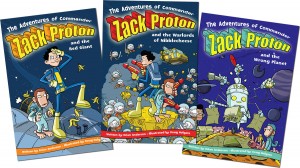
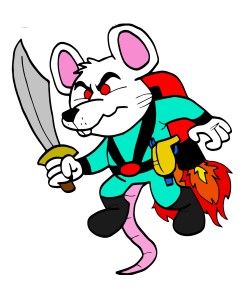
Most of the piñatas on this site took me anywhere from two to four weeks from beginning to end, but the actual number of hours worked each day during that time is pretty small. I might spend 10 minutes layering papier mâché onto a piñata, for example, and then let it dry for two hours before spending another 15 minutes adding the next layer. If I had to guess a number of hours worked, I would say that for something like the Dolphin or Hello Kitty it's maybe 20-30 hours altogether. The Alien Planet was probably 10 hours max. The Warlord of Nibblecheese took about 40 hours over the course of two weeks (with many delays due to rain). The Green Dragon and Rainbow Zebra both took much longer because they were unlike anything I had done previously. I probably spent 80 hours on the first Rainbow Zebra, and 60 hours on the second. The Rainbow Zebras took about six weeks from beginning to end. It took me over an hour just to fluff up the crepe paper on each of those when they were done!
How much does it cost to make a piñata?
The basic materials are super-cheap: flour, water, balloons, old newspapers, and masking tape. This gets you to the decorating stage, and that's what really determines the expense. Most of the smaller piñatas here can be made from start to finish for no more than $10 - $15 in materials cost. The Rainbow Zebra probably cost closer to $80. The Pirates of the Caribbean skull had lots of craft extras like the headband, beads, feathers, and the voodoo doll that all added to the decorating cost, but that's pretty unusual. Most of my piñatas are decorated using things I already have lying around the house (and garage!). I try to find cheap, creative solutions rather than going out and buying a solution.
How many layers of papier-mache do you put on a piñata?
That depends on the size of the piñata and the age of the kids. Hello Kitty's head, for example, was so big that it had to have a certain minimum thickness just to keep from collapsing in on itself when I removed the punch ball. The Disco Feepit and Green Shoyru had the same problem only much worse, since those were made with a punch ball stracked on top of a punch ball. Typically I find that three layers is the minimum necessary for a normal balloon-sized pinata to really hold its shape. I usually go thicker than that (especially on large balloons) and then weaken the walls with a knife or razor blade. The reasons for this are explained on the Tips and Tricks page.
Do you always use balloons, or do you sometimes use cardboard boxes or tubes or other things to form the shape of the piñata?
The candy compartment is always made from balloons, because I can control the ease of breakability of that. Sometimes I'll use a cardboard box for a non-target area, such as the head of the Rainbow Zebra, which was made partly from a balloon and partly from a box. I also used the cardboard tubes from rolls of wrapping paper to help give strength to the Rainbow Zebra's legs. Even cardboard as thin as a cereal box is notoriously hard to break, so I never use anything but papier mâché for the target areas of the piñata.
Why do you wrap the balloons in newspaper instead of just laying the papier mâché strips directly onto the balloon?
I used to lay the papier mâché strips directly onto the balloon, but this leads to a couple different problems: 1) the ballons expand in the sun as the papier mâché strips dry, and the papier mâché sticks to the balloon and causes it to expand unevenly. The result was a lot of balloons popping in my backyard during the drying stage; 2) if I wrap the balloon in newspaper first, it doesn't take as many layers of papier mâché before the piñata holds its shape. This allows me to make thinner walls for younger kids to break. A balloon wrapped in newspaper and then layered in papier mâché will usually hold its shape after three layers, but if it's not wrapped in newspaper first, the same size balloon can take five or six layers to hold its shape once the balloon is removed.
How much planning do you do in advance, and how much of the piñata is made up as you go along?
All of my piñatas begin with a sketch of some kind, but every single one requires improvisation at some point. When my daughter said she wanted a Porcupine Pufferfish piñata, I had no idea how I was going to do the spikes. They had to stick straight out on all angles and not sag from gravity, but they could only be attached at one end. I started working on the Disco Feepit without knowing what I would use for the tufts and tail. The wings of the Green Shoyru were a real challenge, because they're huge and heavy, but are attached at only two tiny points on the back. The black eyes of the Dolphin were a last-minute idea, and the lips of the Tropical Fish were pure luck -- I saw a red sponge ball, squished it just right, and knew I had my fish lips. There is always a lot of improvisation both in building and in decorating the piñatas. In almost every case I find myself working on the piñata without knowing how I'm going to accomplish some aspect of it, but I always work it out once I get there.
How can you spend so much time making a piñata only to watch a bunch of kids smash it to pieces in a matter of minutes?
I'm not just building piñatas, I'm building memories. I have photos, of course, but more importantly, all these piñatas have become an indelible part of my kids' childhood memories, and those will last a lifetime. And I hope that
Do you make piñatas for sale? If I tell you what I want, can you make me one?
Sorry, amigo, no can do. I put so much time into making each piñata that I would have to charge a ridiculous amount of money for each piñata to make it worth my time. But you can make your own piñatas by following the tips and instructions on this web site, and you'll be surprised at how good even the first one turns out to be! Give it a try -- you won't be sorry. |